Mother of the Groom Outfit Ideas to Steal the Show at Any Indian Wedding
Indian weddings are a spectacle. Multiple functions, hundreds of guests, and an unspoken expectation that everyone — especially the groom’s mother — looks utterly stunning throughout. No pressure, right?
Here’s the thing. The mother of the groom holds a unique position at an Indian wedding. She’s not the bride. She’s not a guest. She’s the anchor — the woman who welcomes a new family into hers. Her outfit needs to reflect exactly that.
This guide covers everything: sarees, lehengas, Anarkali suits, color choices, jewellery, budget, and the practical realities of dressing for a 12-hour celebration. Whether you’re shopping for a traditional South Indian ceremony or a fusion North Indian affair, here’s what actually works.
Table of Contents
Understanding Your Role Before You Shop
The groom’s mother has creative freedom that the bride’s mother often doesn’t. Richer tones, bolder embroidery, more festive energy — all of this is yours to claim.
But there’s one guiding principle that experienced stylists return to again and again: elevated, not bridal.
Your goal is quiet authority. Fine fabric, restrained craftsmanship, and colors that photograph beautifully under mandap lights without stealing focus from the couple. That balance is what separates a truly memorable outfit from one that simply tries too hard.
If you’re also considering mother of the groom outfits and dresses from a Western or fusion perspective — perhaps for a post-wedding reception or civil ceremony — boutiques like Frox of Falkirk stock over 2,000 curated options that translate beautifully into multi-cultural wedding settings.
Choosing the Right Outfit Style
Sarees: The Classic Foundation
For traditional Indian weddings, sarees remain the most powerful choice. Two styles dominate the 2025–26 season for mothers of the groom.
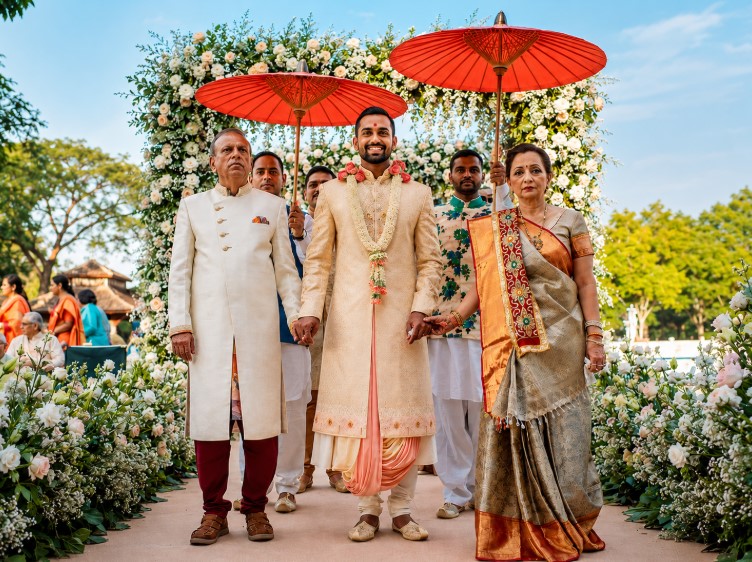
Banarasi silk sarees — originating from Varanasi — feature opulent brocade work, Mughal-inspired floral patterns, and delicate gold or silver zari detailing. They’re comparatively lightweight, which makes them ideal for multi-function weddings where you’re moving between mehendi, baraat, and reception in a single day.
Kanchipuram (Kanjivaram) sarees from South India tell a completely different story. Bold, vibrant, heavy — with temple motifs, peacock patterns, and contrasting borders that command attention. These suit grand traditional ceremonies where formality is expected and photography is a priority.
Tissue and moonga zari sarees sit between the two: fluid drape, luminous finish, and comfortable enough for long hours. Under evening lighting, they create an almost otherworldly glow.
Lehenga Choli: For Sangeet & Celebrations
Lehengas for mothers have evolved. Forget the heavy bridal versions — 2025–26 favors lighter fabrics like georgette, chiffon, and organza that allow actual movement on the dance floor.
Jacket lehengas are particularly popular right now. A long, embroidered jacket worn over the choli creates a layered, sophisticated silhouette that works beautifully for sangeet functions. Mirror work and sequin embellishments catch the light without becoming overwhelming.
Pre-draped lehengas — where the pleats and pallu are already stitched — deserve special mention. They offer all the visual drama of traditional draping with none of the stress. For a mother managing multiple ceremonies across multiple days, this matters more than most styling guides acknowledge.
Anarkali Suits: The Comfort Revolution
Floor-length Anarkali suits have become the go-to choice for mothers who want gown-like elegance with kurta comfort. Fitted at the bust and dramatically flared below, they photograph like formal gowns while feeling nothing like them.
Paired with a silk or brocade dupatta and statement earrings, an Anarkali suit in deep jewel tones rivals any saree for wedding-appropriate gravitas. Sharara and palazzo pant variations offer similar drama with even more ease of movement.
Color: What Works, What Doesn’t
The groom’s mother traditionally wears deeper, warmer tones — creating visual distinction from the bride’s mother in group photographs.
Colors that photograph beautifully and carry cultural significance:
- Burnt orange/rust — energy, transformation, and sophisticated warmth
- Deep gold/antique gold — prosperity, divine blessings, and the wedding metal across Indian traditions
- Wine/maroon — regal and timelessly appropriate
- Emerald green — festive elegance with genuine visual impact
- Royal blue — modern sophistication that reads beautifully in outdoor photography
Colors to approach carefully: bright red (reserved for brides), pure white (mourning associations in many traditions), and neon shades that overpower group photographs. Black, while increasingly modern, remains inauspicious in traditional settings — check with family before committing.
Coordinating With the Wider Wedding Party
One of the most common mistakes? Shopping in isolation.
Discuss your general color family and silhouette type with the bride’s mother before finalizing anything. You don’t need to match — in fact, you shouldn’t. But similar formality levels create cohesion in photographs. A saree-clad bride’s mother standing next to a groom’s mother in a casual kurta creates exactly the visual imbalance that no one notices until the wedding album arrives.
The 60-30-10 color rule applies beautifully here: outfit color (60%), secondary color in accessories (30%), accent jewelry (10%). Follow it and your overall look has natural, professional harmony.
Jewellery, Makeup & Hair: The Details That Complete Everything
Jewellery
Gold jhumkas or chandbalis frame the face beautifully in photographs without competing with outfit embroidery. The rule is simple: if your neckline features intricate embroidery, let your earrings do the statement work and skip the heavy necklace layering.
Match metal tones to outfit embellishments — gold with gold, silver with silver — and you’ll look polished in every light condition from outdoor baraat to indoor reception.
Makeup & Hair
For heavily embroidered outfits, balance is everything. Bold eyes or bold lips — not both. Dewy, luminous skin with defined eyes and lips in shades complementing your outfit’s color family is the most reliable approach.
Hair should frame the face while showcasing jewellery. Sleek buns and soft waves both work; gajra (floral garlands) add traditional charm to updo styles and photograph particularly well in outdoor settings.
Practical Realities: Comfort, Budget & Timing
Fabric for Long Ceremonies
Indian wedding celebrations regularly run 10–12 hours across multiple functions. Lightweight silk, tissue, and moonga zari balance richness with genuine wearability. Save heavier Banarasi or velvet for evening ceremonies — wearing them through a daytime mehendi in summer heat is a decision most mothers regret by noon.
Footwear matters as much as fabric. Block heels or embellished flats over stilettos — your presence in photographs diminishes noticeably when you’re in visible discomfort.
Budget Guidance
Strategic investment beats attempting luxury across every function. Purchase one statement piece in premium fabric — a Kanchipuram saree or handcrafted Anarkali — and accessorize differently across functions. Cotton or chanderi kurta sets work beautifully for mehendi and haldi at a fraction of ceremony wear costs.
Off-the-rack pieces rarely match handcrafted quality or fit. Budget accordingly and factor in alteration time.
Shopping Timeline
Eight to ten weeks before the wedding: order made-to-measure pieces. Six weeks out: finalize color palette. Four weeks: complete fittings and arrange jewellery. Two weeks: trial makeup and confirm footwear comfort. One week: final coordination and organized storage.
Last-minute shopping produces last-minute results.
Conclusion
The mother of the groom doesn’t dress to compete — she dresses to represent. Her outfit communicates welcome, grace, and the joy of gaining a new family member.
Get the fabric right, choose a color that carries cultural weight, coordinate without matching, and wear something you’ve actually tested before the wedding day. Everything else follows naturally from those four decisions.